1、小红帽票务平台所售票品之价格均是官网标注位置之售价,到手票品上显示价格可能与标注售价不同,望你知晓。
2、购票须知:1、成年人节目1.2米及以下儿童谢绝入场(Children under 1.2m will not be admitted, except in performances for children.)。2、亲子儿童节目儿童一律凭票入场。请您谨慎购票,一经出票不退不换,望您知晓!
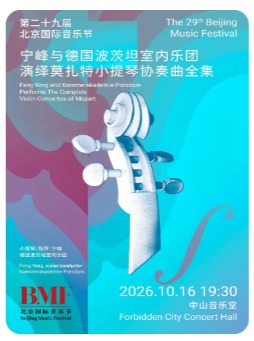
演出名称: 第二十九届北京国际音乐节
宁峰与波茨坦室内学院乐团演绎莫扎特小提琴协奏曲全集
演出时间:2026年10月16日 周五 19:30
演出票价:100 180 280 480 680元
演出地点:中山公园音乐堂
演出时长:120分钟左右
初始开售门票总张数:1200张
温馨提示:
1.本场演出1.2米以下儿童谢绝入场;
2.一旦支付成功,视为已经购票,恕不退换,敬请谅解,请审慎购买!
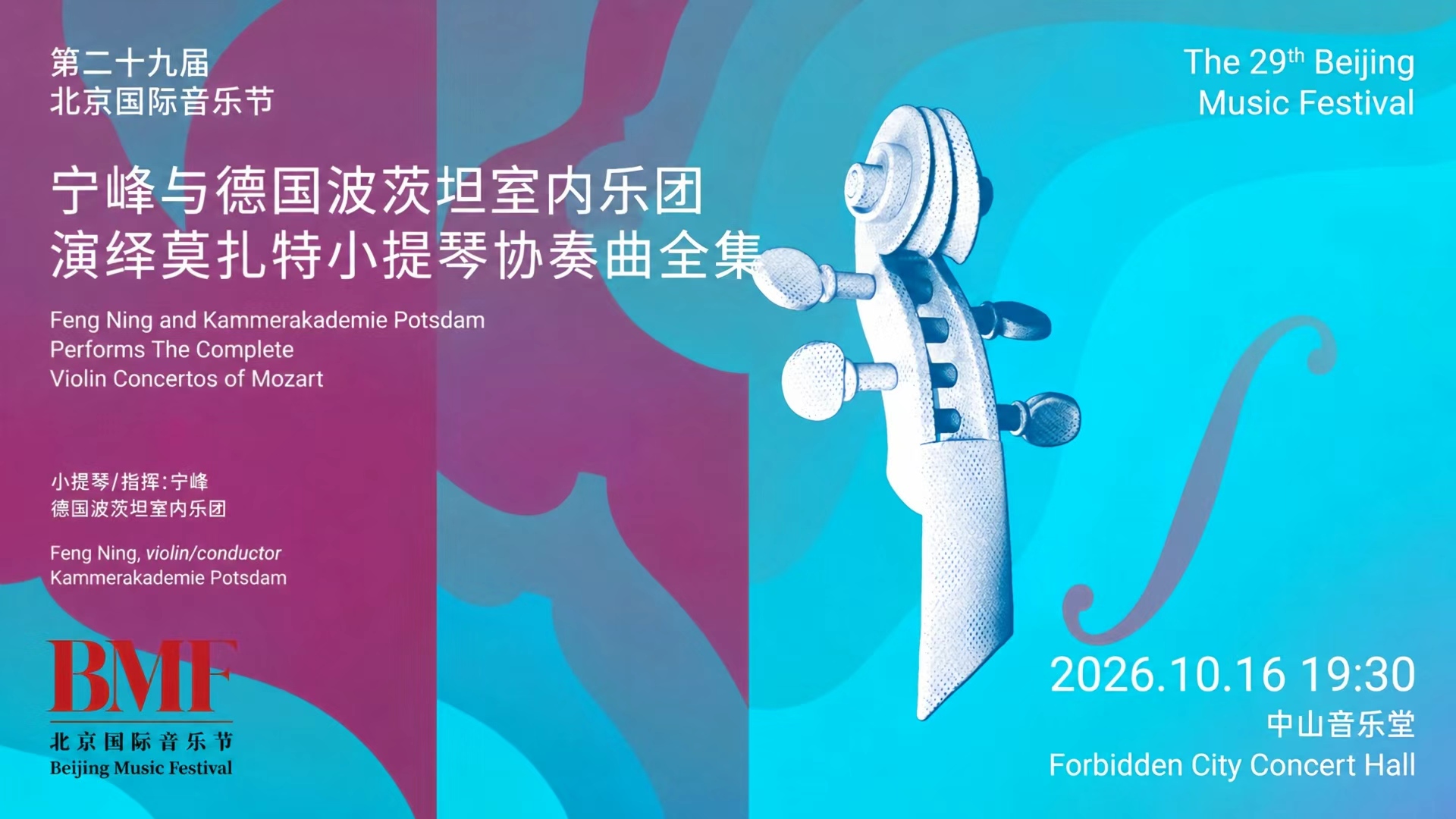
演出名称: 第二十九届北京国际音乐节
宁峰与波茨坦室内学院乐团演绎莫扎特小提琴协奏曲全集
演出时间:2026年10月16日 周五 19:30
演出票价:100 180 280 480 680元
小提琴/指挥:宁峰
乐团:波茨坦室内乐团
演出曲目:
1.《降B大调第一号小提琴协奏曲》,K.207
2.《D大调第二号小提琴协奏曲》,K.211
3.《G大调第三号小提琴协奏曲》,K.216
4.《D大调第四号小提琴协奏曲》,K.218
5.《A大调第五号小提琴协奏曲》,K.219
演出亮点
一晚之内,由一位小提琴家完整演齐莫扎特的全部五部小提琴协奏曲,这本身就是一项令人肃然起敬的壮举。本场音乐会,享誉国际的中国小提琴家宁峰将以独奏兼指挥的双重身份,携德国波茨坦室内学院乐团,为北京观众呈现这场莫扎特小提琴协奏曲的全景巡礼。
莫扎特的五部小提琴协奏曲绝大部分完成于1775年,那一年他还不满二十岁,正在故乡萨尔茨堡担任宫廷乐师。在如此集中的时间里,我们能清晰地听见一位天才以惊人的速度走向成熟:从第一、二部尚带嬉游曲气息的明快,到第三、四、五部在歌唱性、戏剧性与异国情调上的全面飞跃,青年莫扎特艺术成长的连续画卷在听众面前逐渐展开。
宁峰是当今最具国际声誉的中国小提琴家之一,以技术的纯净与音乐的真诚著称。此次他不仅担任独奏,更亲自带领乐团——这种“自拉自指”的演奏方式,正是莫扎特时代的传统:独奏者即是乐队的引领者。这要求演奏家对作品有通盘的把握与极强的掌控力,也让独奏与乐队之间的呼应更加亲密无间。
与宁峰携手的波茨坦室内学院乐团,是德国一支以演奏精准、风格纯正著称的优秀室内乐团,其规模与音响恰好贴合莫扎特时代的演奏传统,能与独奏者形成最为灵敏的呼应。听众可以特别留意五部协奏曲慢乐章的演变——从第一、二部尚显规整的优美,到第三部那段被誉为“天籁”的纯净柔板,莫扎特的歌唱性如何一步步走向深邃。此外,每部协奏曲的华彩乐段,则是宁峰个人技艺与音乐想象的集中展示,值得细细品味。以独奏兼指挥的方式连演五部,宁峰将在这个夜晚挑战体力与专注力的极限;而这场音乐会,也是一位演奏家对他挚爱的作曲家的深情告白。
曲目介绍
降B大调第一小提琴协奏曲,K. 207
作为五部协奏曲的开篇,第一协奏曲创作于1773至1775年间,洋溢着青春的朝气与明快。它的写法尚带有几分嬉游曲与意大利风格的影子,乐队与独奏之间的关系相对单纯,但莫扎特天生的歌唱性与优雅已清晰可辨。第一乐章活泼利落,第二乐章温柔如歌,末乐章则以轻盈的回旋曲收束,是了解莫扎特协奏曲风格起点的绝佳入口。尽管这是五部中最“年轻”的一部,作品中独奏小提琴明快流畅的歌唱,已清晰地预告了莫扎特日后的光芒。
D大调第二小提琴协奏曲,K. 211
完成于1775年的第二协奏曲,延续了第一部明朗优雅的气质,却在结构的均衡与旋律的从容上更进一层。全曲规模精巧,气息亲切,仿佛一位翩翩少年彬彬有礼的自我介绍。第二乐章的柔板尤为动人,独奏小提琴在弦乐的衬托下娓娓道来;末乐章的回旋曲则轻快而典雅,处处可见莫扎特对器乐歌唱性的天然敏感。这部协奏曲规模虽不宏大,却如一件打磨精致的小品,是莫扎特由“写得出色”迈向“写得动人”的关键一步。
G大调第三小提琴协奏曲,K. 216
从第三协奏曲开始,莫扎特的小提琴协奏曲迈入了真正成熟的境界。第一乐章明媚开阔,独奏声部愈发自信舒展;第二乐章是一首令人屏息的柔板,旋律纯净空灵,被誉为莫扎特最美的慢乐章之一;末乐章则别出心裁地插入了一段速度与风格突变的乡村舞曲,诙谐而出人意料,尽显莫扎特的机智。
莫扎特的创作技法在这部作品里展现出明显的进步,独奏小提琴与乐队之间的对话变得愈发细腻而富于戏剧性,木管乐器也被赋予了更多色彩性的独立段落。无论是技术的成熟还是情感的深度,它都标志着青年莫扎特的一次决定性飞跃,至今仍是音乐会上最常被演奏的莫扎特协奏曲之一。
D大调第四小提琴协奏曲,K. 218
第四协奏曲气度雍容、华丽大方。第一乐章以独奏小提琴高亢嘹亮的进入开篇,充满堂皇的仪式感;第二乐章转为温婉抒情的歌唱;末乐章则在小步舞曲与轻快的回旋之间灵活切换,节奏俏皮、风格多变,洋溢着舞会般的欢愉气氛。全曲在典雅与活力之间取得了完美的平衡。第一乐章开篇那段嘹亮的进入,因其号角般的姿态,使这部作品有时被昵称为“军队”协奏曲。它与紧随其后的第五协奏曲一道,代表着莫扎特小提琴协奏曲在华彩与抒情两端的全面成熟。
A大调第五小提琴协奏曲,K. 219
作为五部协奏曲的压轴,第五协奏曲是其中规模最大、最富戏剧性与想象力的一部,被认为是莫扎特小提琴协奏曲艺术的巅峰。第一乐章在乐队明快的引子之后,独奏小提琴却出人意料地以一段宁静如梦的慢板飘然进入,随后才转入灿烂的快板,构思之巧妙令人叫绝。最负盛名的是末乐章:在优雅的小步舞曲回旋之间,突然闯入一段狂野奔放的“土耳其风格”插部,低音弦乐以弓杆击打琴弦来模仿土耳其军乐的鼓点,异国情调扑面而来。正因如此,这部作品又被称为“土耳其协奏曲”,为整晚的莫扎特之旅画上一个充满惊喜的句点。
Highlights
To play all five of Mozart's violin concertos in a single evening is, by any measure, a feat to command respect. Tonight the internationally celebrated Chinese violinist Ning Feng, in the double role of soloist and director, joins Germany's Kammerakademie Potsdam for a complete panorama of the Mozart violin concertos.
Nearly all five concertos date from 1775, when Mozart — not yet twenty — was serving as concertmaster at the Salzburg court. Within that concentrated span we hear a genius maturing at astonishing speed: from the divertimento-like brightness of the first two concertos to the full flowering of song, drama and exotic color in the last three, the continuous portrait of the young Mozart's growth unrolls before the listener in a single evening.
Ning Feng, among the most internationally renowned of Chinese violinists, is admired for the purity of his technique and the sincerity of his musicianship. Tonight he not only plays but leads: play-directing was precisely the custom of Mozart's own day, when the soloist was the ensemble's guide. It demands total command of the score — and rewards it with an intimacy between soloist and orchestra that no baton can supply.
His partner in this marathon, the Kammerakademie Potsdam, is a German chamber orchestra prized for precision and stylistic purity, scaled exactly to the sound-world of Mozart's era and quick to answer the soloist's every impulse. Listeners may care to follow the evolution of the slow movements — from the well-mannered beauty of the first two concertos to the celebrated “heavenly” Adagio of the Third — as Mozart's lyricism deepens step by step; and to savor the cadenzas, where Ning Feng's own artistry and imagination stand alone in the light. To play and direct all five in one night is to test the very limits of stamina and concentration; it is also one performer's declaration of love for the composer he holds dearest.
Program Notes
Violin Concerto No. 1 in B-flat major, K. 207
The cycle's opening work, written between 1773 and 1775, brims with youthful verve. Its manner still carries traces of the divertimento and the Italian style, and the dialogue between soloist and orchestra is comparatively simple — but Mozart's native gifts of song and elegance are already unmistakable. A brisk first movement, a tenderly singing second, a light-footed rondo finale: the ideal doorway into the cycle. Youngest of the five it may be, yet the violin's fluent cantilena already announces the Mozart to come.
Violin Concerto No. 2 in D major, K. 211
Completed in 1775, the Second carries forward its predecessor's bright elegance while gaining in balance and ease. Compact in scale and intimate in tone, it is like the graceful self-introduction of a well-mannered young man. The slow movement sings with particular sweetness, the solo line unfolding gently over cushioned strings; the rondo finale is quick and courtly, alive everywhere with Mozart's instinct for making instruments sing. A small canvas, finely polished — the step at which Mozart's writing turned from excellent to touching.
Violin Concerto No. 3 in G major, K. 216
With the Third, Mozart's violin concertos come fully of age. The first movement is open and radiant, the solo part newly confident and free; the Adagio is a held breath, its pure, floating line often called one of the loveliest slow movements Mozart ever wrote; and into the finale he springs a surprise — a sudden rustic dance in altered tempo and style, witty and wholly unexpected. Mozart's craft advances visibly here: the dialogue between soloist and orchestra grows subtler and more dramatic, and the winds receive color and independence of their own. In technique and in feeling alike it marks the young composer's decisive leap, and it remains among the most frequently performed of all his concertos.
Violin Concerto No. 4 in D major, K. 218
The Fourth is all pomp and polish. The soloist's ringing entry gives the first movement a ceremonial blaze; the second turns to warm, lyric song; the finale alternates minuet grace with quick-footed rondo high spirits, ballroom gaiety written into every bar — poise and energy in perfect balance. The trumpet-like flourish of its opening has earned the work the occasional nickname of “Military” Concerto; together with the Fifth it represents the full maturity of Mozart's concerto writing, in brilliance and in song alike.
Violin Concerto No. 5 in A major, K. 219
The crowning work of the cycle is its largest, most dramatic and most imaginative — by common consent the summit of Mozart's art in the genre. After the orchestra's brisk introduction, the soloist enters not with fireworks but with a dreamlike Adagio suspended out of time, and only then launches the true Allegro — a stroke of pure genius. Most famous of all is the finale: into its elegant minuet erupts a wild “Turkish” episode, the low strings striking with the wood of their bows in imitation of Janissary drums — an irruption of the exotic that gave the work its nickname, the “Turkish” Concerto, and gives tonight's Mozart marathon its final, delighted surprise.
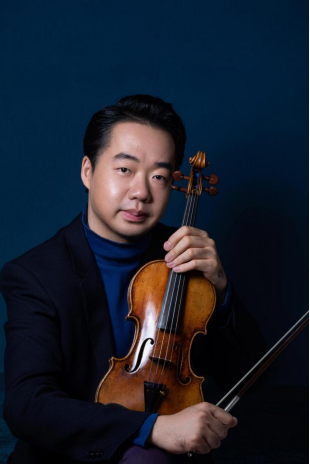
宁峰,小提琴
 作为享誉全球的小提琴家,宁峰以其音乐中饱满的抒情性、天生的乐感和令人叹服的演奏技巧受到国际乐坛的广泛认可。他在全世界各地与著名的交响乐团及指挥家合作演出,并且也经常在国际上最重要的音乐季和音乐节举行独奏及室内乐音乐会演出。《华盛顿邮报》盛赞宁峰有着“奶油一样细腻质感的音色和真实的情感”,《留声机》杂志就宁峰新专辑《勃拉姆斯钢琴与小提琴奏鸣曲》评论道“音色简直美轮美奂,即便升至极高的音域也是如此”。
24/25乐季的亮点包括:宁峰与圣马丁室内乐团在中国的音乐会,与奥尔堡交响乐团、BBC苏格兰交响乐团、哈雷交响乐团、皇家利物浦爱乐乐团和首尔爱乐乐团的合作。近年宁峰曾与纽约爱乐乐团、洛杉矶爱乐乐团、西雅图交响乐团、美国国家交响乐团和明尼苏达交响乐团等美国乐团合作。在欧洲,他频繁与顶级乐团合作,包括巴伐利亚广播交响乐团、法兰克福广播交响乐团、维也纳广播交响乐团、赫尔辛基爱乐乐团、柏林音乐厅管弦乐团等。在英国,与伦敦爱乐乐团、英国皇家爱乐乐团、伯恩茅斯交响乐团等。在其他地区,他近期重返圣保罗交响乐团、墨尔本交响乐团和韩国KBS交响乐团。他曾与许多杰出的指挥家合作,包括贾南德拉·诺塞达、玛琳·艾尔索普、图冈·索基耶夫、瓦西里·佩特连科、余隆、吕嘉、汤沐海、张国勇、杨洋、李心草、张艺、林大叶、黄屹等。
在中国作为最受瞩目的独奏家之一,宁峰定期与所有中国的主要乐团合作、演出独奏会,并与访华巡演的国际乐团合作。他曾与指挥大师梵志登领衔的香港管弦乐团进行了欧洲、亚洲以及澳洲巡演,并曾作为独奏家与众多乐团在中国巡演,包括曾在布达佩斯合作多次的伊万·费舍尔领衔的布达佩斯节日乐团,劳伦斯·福斯特领衔的柏林音乐厅管弦乐团,以及频繁合作的英国皇家利物浦爱乐乐团。他曾担任上海交响乐团20/21乐季驻团艺术家。在23/24乐季,宁峰担任国家大剧院23/24乐季驻院艺术家,呈现了巴赫《无伴奏小提琴奏鸣曲与组曲》全集,并领衔国家大剧院管弦乐团演出莫扎特5首小提琴协奏曲全集。本乐季他将继续在国内广泛演出协奏曲、独奏和室内乐音乐会。
荷兰Channel Classics唱片公司为宁峰录制了多张备受好评的唱片,其中《巴赫无伴奏小提琴奏鸣曲与组曲全集》唱片被《留声机》杂志称赞为“与众不同的录音,这是一场充满了想象力的音乐对话,观众也深深为之吸引”。其它已发行的录音还收录了埃尔加和柴可夫斯基小提琴协奏曲,布鲁赫、萨拉萨蒂、拉罗、拉威尔、 比才/沃克斯曼等作曲家为小提琴和乐队而写的作品,帕格尼尼《24首随想曲》,以及他与钢琴家左章共同录制的勃拉姆斯《钢琴与小提琴奏鸣曲全集》。最近发行的专辑是宁峰与指挥家庄东杰执棒的波鸿交响乐团共同录制的《肖斯塔科维奇与普罗科菲耶夫小提琴协奏曲》,已于2024年11月正式发行。
宁峰频繁在伦敦的威格莫尔音乐厅演出独奏会,2025年7月将与钢琴家孙烈音合作二重奏音乐会。24/25乐季其他重要的独奏会包括与尼尔森·戈纳和埃德加·莫罗的三重奏音乐会,以及演绎巴赫和帕格尼尼无伴奏作品的独奏音乐会。他曾多次在基辛根夏季音乐节、舒伯特音乐节、石荷州音乐节、海德堡音乐节、路德维希堡音乐节等音乐节上演出,并与丹尼尔·穆勒-朔特和尼古拉斯·安格里希和伊戈尔·列维特等艺术家合作。
宁峰出生于中国成都,曾就读于四川音乐学院,跟随胡惟民教授学习,并在柏林汉斯·艾斯勒音乐学院和英国皇家音乐学院追随Antje Weithaas和胡坤深造,宁峰是英国皇家音乐学院近两百年历史上首位在毕业独奏音乐会上拿到满分的学生,并获颁英国皇家音乐学院院士(FRAM),此殊荣仅授予300名在音乐领域有杰出表现的该学院毕业生。宁峰多次在国际舞台上获奖,包括汉诺威国际小提琴比赛、伊丽莎白女皇国际小提琴比赛和耶胡迪·梅纽因国际小提琴比赛等重要赛事。在2005年迈克·希尔国际小提琴比赛(新西兰)中宁峰获得第一名,在2006年宁峰在帕格尼尼国际小提琴比赛这项小提琴领域的最高赛事中获得了冠军。
宁峰演奏的是一把由飞跃演奏香港有限公司提供的1710年斯特拉迪瓦里小提琴“维厄当”,他所使用的琴弦由维也纳Thomastik-Infeld工作室制作。
宁峰居住在柏林,任柏林汉斯·艾斯勒音乐学院小提琴教授,并在英国北方皇家音乐学院担任国际小提琴导师。他还担任浙江音乐学院室内乐学院艺术总监,及四川音乐学院小提琴研究院副院长。
Ning Feng is recognised internationally as an artist of great lyricism, innate musicality and stunning virtuosity. He performs across the globe with major orchestras and conductors, and in recital and chamber concerts in some of the most important international series and festivals. The Washington Post has described him as “a wonderful player with a creamy, easy tone and an emotional honesty” and Gramophone magazine said of his recent Brahms Sonatas recording that his “tone is simply ravishing, even when it soars into the stratosphere…”.
Highlights in the 24/25 season include performance with Academy of St Martin in -the Fields on a tour to China, Aalborg Symphony, BBC Scottish Symphony, Hallé, Royal Liverpool Philharmonic and Seoul Philharmonic Orchestras. In recent seasons Ning Feng has performed with the New York Philharmonic, Los Angeles Philharmonic, Seattle Symphony, National Symphony and Minnesota Orchestras in the US. In Europe he performs regularly with the very top orchestras, including Bavarian Radio Symphony, Frankfurt Radio Symphony, Vienna Radio, Helsinki Philharmonic and Berlin Konzerthaus Orchestra and in the UK with orchestras including London Philharmonic, Royal Philharmonic and Bournemouth Symphony. Elsewhere, he returned recently to the São Paulo Symphony Orchestra, Melbourne Symphony and KBS Symphony in Seoul. Conductors with whom he has worked include Gianandrea Noseda, Marin Alsop, Tugan Sokhiev, Vassily Petrenko, Long Yu, Jia Lv, Muhai Tang, Guoyong Zhang, Yang Yang, Xincao Li, Yi Zhang, Daye Lin, Yi Huang and etc.
In China, Ning is held in the highest regard, appearing with all the major Chinese orchestras, in recital and regularly with visiting international orchestras such as Hong Kong Philharmonic, with whom he has toured Asia, Europe and Australia with van Zweden and Budapest Festival Orchestra and Iván Fischer, Berlin Konzerthaus Orchester and Lawrence Foster, and Royal Liverpool Philharmonic Orchestra. In 20/21 he was Artist-in-Residence with the Shanghai Symphony Orchestra and in 23/24 he was the Artist-in-Residence at China NCPA where he performed the complete Bach Sonatas and Partitas for Solo Violin and play-lead NCPA Orchestra to perform Mozart’s 5 Violin Concerti. This season he will perform extensively throughout China as concerto soloist and in solo and chamber recital.
Ning performs regularly at London’s Wigmore Hall, returning in July 2025 for a duo recital with Yeol Eum Som. Other recital highlights in Europe this season include trio recitals with Nelson Goerner and Edgar Moreau and solo recitals with a programme of Bach and Paganini. He has performed many times at Kissinger Sommer Festival and at other festivals including Schubertiade, Schleswig-Holstein, Heidelberg, Ludwigsburg and has collaborated with artists such as Daniel Müller-Schott, Nicholas Angelich and Igor Levit.
Ning Feng records for Channel Classics. His recording of Bach’s complete solo works for violin was hailed by Gramophone as “unlike anyone else’s… it’s the illusion of a freewheeling conversation projected from within” His discography also includes concerti by Elgar and Tchaikovsky, works for violin and orchestra by Bruch, Sarasate, Lalo, Ravel and others, the 24 Paganini Caprices and the complete Brahms Sonatas with Zee Zee. His recent release in November 2024 is Shostakovich and Prokofiev Violin Concertos, with Bochum Symphony Orchestra and Tung-Chieh Chuang.
Born in Chengdu, China, Ning Feng studied at the Sichuan Conservatory of Music with Weimin Hu, the Hanns Eisler School of Music (Berlin) with Antje Weithaas and the Royal Academy of Music (London) with Hu Kun. He was First Prize winner of both the 2005 Michael Hill International Violin Competition (New Zealand) and 2006 International Paganini Competition.
Ning Feng plays the 1710 Stradivari violin known as the “Vieuxtemps Hauser” , by kind arrangement
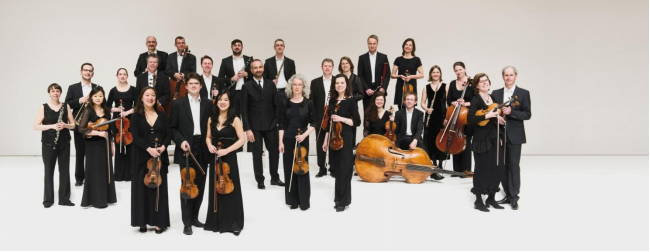
德国波茨坦室内乐团
自2000年成立以来,德国波茨坦室内乐团凭借其引人入胜的音乐会、多样化的曲目以及对最高艺术品质的不懈追求而著称。作为勃兰登堡州府的管弦乐团和波茨坦尼可莱音乐厅(Nikolaisaal)的驻厅乐团,乐团以其无比热忱与永恒探索的精神,在四个世纪的音乐长河中游弋,其声誉早已超越国界。乐团在2015年、2022年、2024年和2025年四度斩获德国古典音乐大奖(OPUS Klassik),在波茨坦和勃兰登堡州为各年龄段观众举办系列音乐会,在德国和欧洲诸多重要音乐厅演出,发行了屡获殊荣的唱片,并于2018年创立了勃兰登堡州首个乐队学院,凡此种种,无不彰显着乐团的卓越成就和创新精神。自2010/11乐季起,安东内洛·马纳科尔达(Antonello Manacorda)继米夏埃尔·桑德林(Michael Sanderling)、安德烈亚·马康(Andrea Marcon )和塞尔吉欧·阿佐里尼(Sergio Azzolini)之后,担任乐团的首席指挥和艺术总监一职。
在2024/25乐季,乐团将与国际知名艺术家合作,包括钢琴家伊戈尔·列维特(Igor Levit)、塞德里克·蒂贝吉安(Cédric Tiberghien)、卢卡斯·史特纳特(Lukas Sternath)、皮埃尔-洛朗·艾马尔(Pierre-Laurent Aimard)和亚历山大·梅尔尼科夫(Alexander Melnikov),女高音玛格德莱娜·柯仁娜(Magdalena Kožená)、大提琴家让-吉恩·奎拉斯(Jean-Guihen Queyras)和马克西米利安·霍侬(Maximilian Hornung),小提琴家贝芭·丝凯德(Baiba Skride)、安特耶·魏特哈斯(Antje Weithaas)和维罗妮卡·埃伯勒(Veronika Eberle),以及单簧管演奏家马丁·弗罗斯特(Martin Fröst)。小提琴家克里斯蒂安·特兹拉夫(Christian Tetzlaff)将担任本乐季的驻团艺术家。除安东内洛·马纳科尔达外,陈以琳(Elim Chan)、Holly Hyun Choe、伯纳德·拉波迪(Bernard Labadie)、约书亚·韦勒斯坦(Joshua Weilerstein)、马库斯·史坦兹(Markus Stenz)、瓦茨拉夫·卢克斯(Václav Luks,德国波茨坦无忧宫音乐会的艺术合作伙伴)以及自2025/26乐季起担任乐团艺术总监的弗朗索瓦·利雷(François Leleux)等指挥家也将轮番执棒,与乐团同台演出。
作为波茨坦的文化名片,波茨坦冬季歌剧院(The Potsdamer Winteroper)自2005年以来致力于再现波茨坦250年历史的歌剧传统。在新宫剧院再次闭关前的最后一年,乐团与汉斯·奥图剧院(Hans Otto Theater)联合呈现海顿的三幕歌剧《阿尔米达》(Armida)。曾为波茨坦冬季歌剧院的发展作出重要贡献的康拉德·扬汉内尔(Konrad Junghänel)被任命为音乐总监。导演比约恩·赖因克(Björn Reinke)将首度在波茨坦冬季歌剧院担任歌剧导演,而曾在汉斯·奥图剧院工作的著名布景与服装设计师西比勒·盖德克(Sibylle Gädeke)将重返波茨坦负责布景设计。
作为波茨坦和勃兰登堡州的文化大使,乐团在汉堡易北爱乐音乐厅、柏林爱乐音乐厅和杜塞尔多夫音乐厅等重要的音乐厅演出。安东内洛·马纳科尔达将携手乐团和歌唱家戈尔达·舒尔茨(Golda Schultz)、查尔斯·卡斯特罗诺夫(Charles Castronovo)和凯尔·凯特森(Kyle Ketelsen)等,在波茨坦、柏林、巴登-巴登节日剧院和巴黎香榭丽舍剧院共同呈现韦伯歌剧《自由射手》(Der Freischütz)的音乐会版。此外,乐团还应邀参加基辛格夏季音乐节、布拉格之春国际音乐节、维尔茨堡莫扎特音乐节和波恩贝多芬音乐节等享誉盛名的音乐节。
通过在波茨坦利希滕奥宫举办的室内乐系列、KAPmodern现代音乐会系列和新KAPmeets延伸活动系列,以及与巴贝里尼博物馆、波茨坦市立和州立图书馆等长期成功的合作,不断丰富了这个由35名音乐家组成的独立管弦乐团的多元化音乐版图。
为使音乐之美惠及更多听众,乐团开展形式多样的延伸活动,从互动性强的家庭音乐会到学校及日托中心的音乐工作坊。通过获得2017年“文化开启世界”BKM特别奖的先锋项目“音乐启发视角”,乐团在波茨坦-德雷维茨地区持续深耕文化教育、公众参与和机会平等的沃土。